ARTICLE
Help your kids make
healthy food choices
Most kids, given a choice, would nibble
on snacks and sweets all day rather than face a plate of healthy food. It is up to us as parents to gently steer them in the right direction by educating them from a young age as to what will make their bodies strong and healthy.
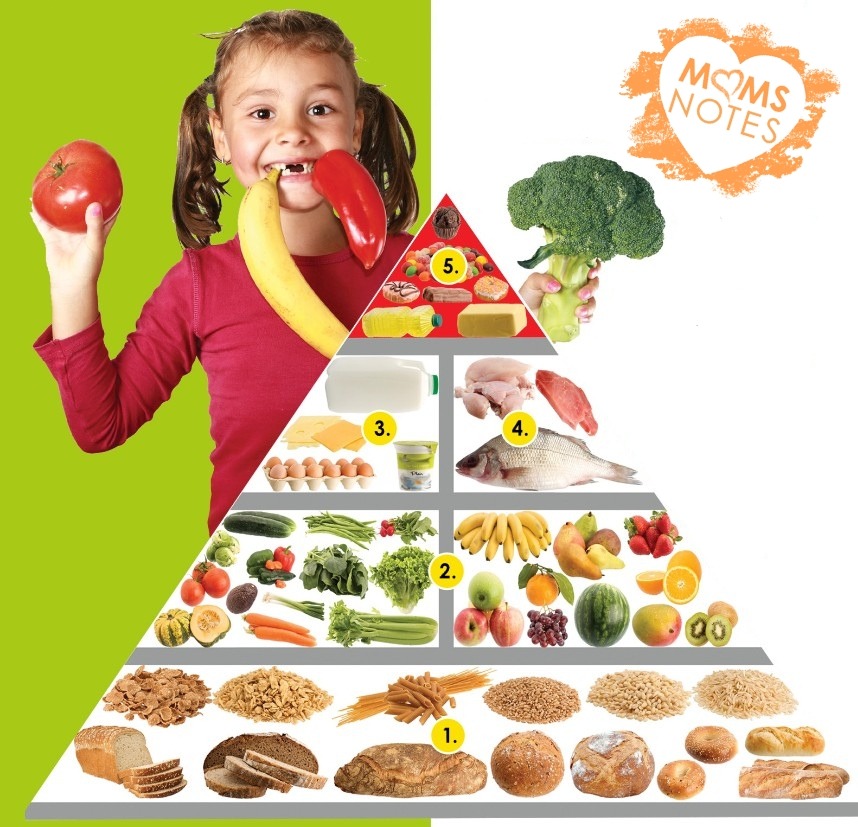
The food pyramid guide emphasises the importance of a balanced diet, which
includes at least 3 to 5 food groups in every meal. The pyramid structure helps children understand the proportions of different food items needed for their growth and development. The top portion of the pyramid indicates food items that should be consumed in small quantities, while the lower portion suggests items that can be consumed in larger quantities. This visual guide aids in making healthy food choices for parents and children.
For a healthy, balanced diet, incorporate various foods from all food groups, including fruits, vegetables, grains, protein, and dairy. This diversity ensures that your body receives all the necessary nutrients. Lets look at the five primary food groups that are part of the food pyramid guide.
1. Grains
Children are involved in many physical activities and need carbohydrates as an energy source to help improve their cognitive skills. Grains, including bread, cereals, oats, pap and rice are a source of carbohydrates.
2. Vegetables and fruits
Children need minerals and vitamins. Seasonal vegetables are a good source of these nutrients. Green leafy vegetables are also rich in nutrients, and it is recommended that children include five or more green and coloured vegetables in their daily meals. Eating these vegetables also reduces the risk of obesity, heart disease, cancer, and diabetes. Vegetables can be raw or cooked.
Seasonal fruits are a good source of vitamins and fibre content. Whole fruits are recommended when compared to fruit juices. They also boost immunity and prevent metabolic diseases.
3. Milk/Dairy
Milk and dairy products provide your child with the required amount of calcium, vitamins, and proteins. These nutrients help in bone growth and building strong teeth. These products include yoghurt, maas, buttermilk and cheese.
4. Meat/Beans/Fish
Meat, beans, and fish are rich in proteins and other nutrients essential to child growth. They help build and replace the tissues in the child’s body. Examples include dry beans, eggs, nuts, seeds, black beans, peas and sprouts.
5. Fats and oils (and a very occasional sweet treat)
Additionally, the food pyramid includes fats and oils. Fats and oils might sound unhealthy, but not all fats are harmful. Fats occupy a small portion of the food
pyramid, but children require an adequate amount of unsaturated fats and oils as they are still developing mentally and physically. They are also involved in a lot of physical activity which requires lots of energy!
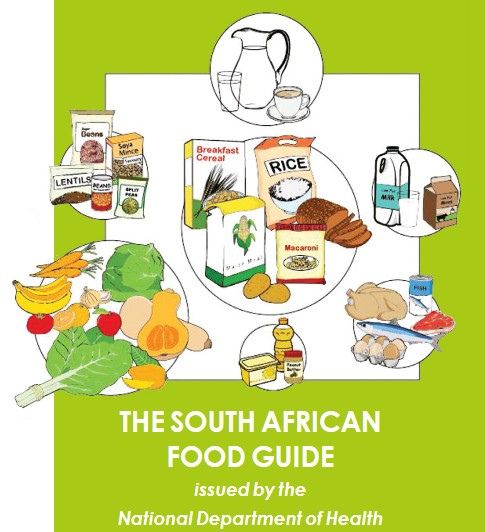
This food guide provides advice for South Africans 5 years and older regarding
healthy food choices. Most choices of foods should be ones that are low in
saturated fats, low in added sugar and added sodium; and will provide
essential nutrients.
What we like about this food guide is the emphasis on fluid intake. This cannot
be over-stated. Keeping our bodies hydrated is just as important as what we eat.
We also agree with the emphasis on lentils, beans and split peas, etc.
They provide essential minerals, protein, fibre and many other nutrients which are vital – especially in households that don’t eat a lot of
meat.
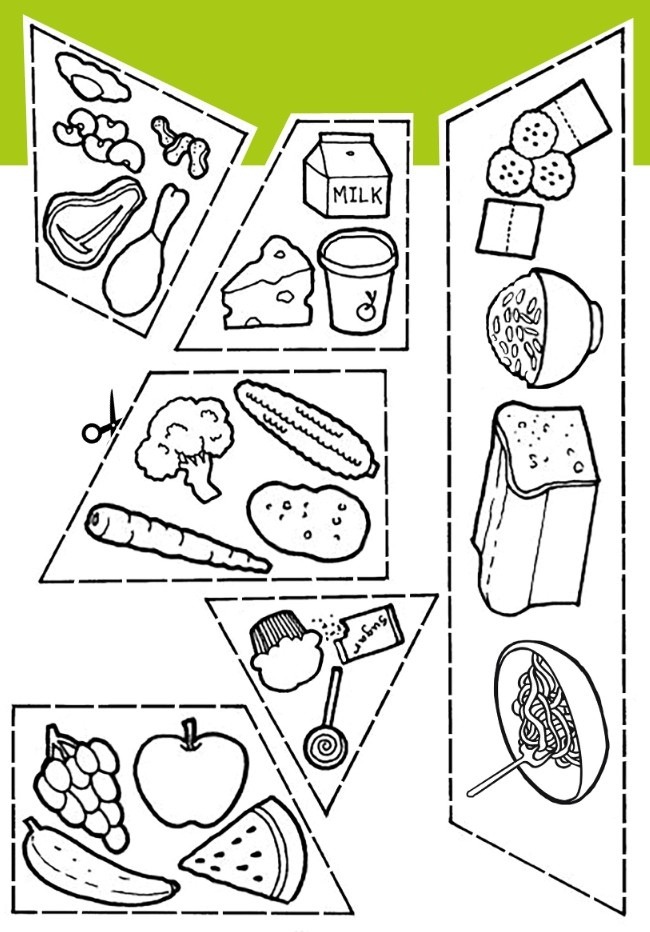
Hey kids! Some colour in fun for you!
Colour in this page then cut out the pieces along the dotted lines.
Arrange the cut out pieces to form a pyramid (or triangle) and stick
them on to a sheet of paper. Then stick it on the fridge.
You now have your own food guide to help you
make healthy food choices.