
ARTICLE
Presence, not just love.
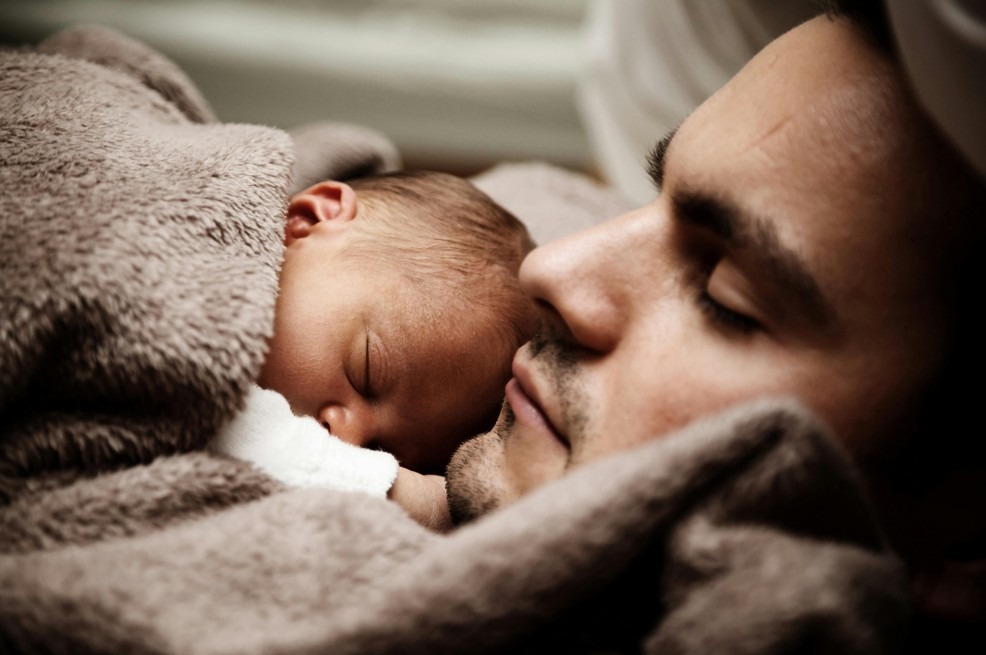
Why the first three years matter most…
– As explained by parenting expert, Dr. Erica Komisar, LCSW
Fathers rarely get to be really involved, or even present, in the first three years of their children’s lives, when they are home – that’s where the magic happens.
It is hard for fathers to be a part of their partners’ pregnancies and to be physically present for their children in the first three years; not only because of flawed societal norms, but because they feel like they’re not as needed.
New research proves that, from their babies’ first skin-to-skin, till their first day at preschool, dads are much more needed than they know.
In our modern culture, the phrase “it’s not about quantity, it’s about quality” has become a comfortable refrain for parents balancing demanding careers and raising young children. It’s meant to ease the guilt that comes with being away. But neuroscience, attachment research and decades of clinical experience tell us otherwise.
In the first three years of life children do not experience love as an abstract concept – they experience it through consistent physical, and emotional presence. These early years are not simply another developmental stage. They are the foundation upon which the rest of a child’s emotional, cognitive, and social health is built.

The biological role of mothers:
From the moment a baby is conceived the mother’s body becomes the child’s first home. Hormones such as oxytocin and prolactin prime mothers to bond and respond to their babies’ cues. This isn’t sentimentality – it is biology designed to ensure the survival of the species.
Presenece during this period is not optional – it is a biological necessity.
After birth, a mother’s presence continues to regulate a baby’s stress response system. When a baby cries, it is not manipulation, it is an immature nervous system asking for co-regulation.
The mother’s voice, scent, and touch help regulate cortisol levels, which shapes the architecture of the brain. Without this steadying presence, babies can become biologically flooded with stress hormones, a state that over time can impair emotional resilience.
In other words, “bonding” is not a weekend activity. It is a constant process of mutual regulation, repetition, and proximity.
The biological role of fathers:
While mothers provide a unique biological connection in early infancy, fathers also have a profound and irreplaceable role from the very beginning.
A father’s early involvement helps the child experience a secure, two-person attachment network.
Fathers often introduce a style of interaction that encourages exploration, risk-taking, and problem-solving.
When balanced with the mother’s nurturing, this creates an emotional “team” that supports the child’s development. But for fathers to truly fulfil this role, they too must be physically and emotionally available in those early years—not as weekend visitors, but as active daily participants.
Why the first three years are critical:
By age three, roughly 85% of the brain’s architecture is formed. Neural pathways for empathy, emotional regulation, and resilience are laid down during this time. Secure attachment — built on consistent caregiving — teaches a child that the world is safe, people are reliable, and emotions are manageable.
Here’s the hard truth: you cannot outsource attachment.
A warm, loving nanny or daycare worker can offer care, but they cannot replace the deep biological and emotional attunement of a parent.
Too much separation in the early years can result in what psychologists call “insecure attachment,” which is linked to anxiety, depression, and relational struggles later in life.

Emotional availability matters as much as physical:
Being present does not simply mean being in the same room. It means being emotionally available – responding to cues, offering comfort, making eye contact, and engaging in back-and-forth interactions. Parents can be physically home but emotionally absent – distracted by phones, work emails, or constant busyness.
Babies and toddlers are exquisitely sensitive to emotional attunement. They notice when our minds are elsewhere. Children who had emotionally available parents in those first three years often enter school with greater resilience, empathy, and confidence. They are better equipped to handle frustration, to connect with others, and to manage their own emotions.
Conversely, many of the adolescents and adults treated for anxiety and depression trace their struggles back to disruptions in early attachment. These wounds are not irreversible, but they are preventable.
Parenting is not about perfection. It is about presence, attunement, and a willingness to sacrifice in the short term for the sake of a child’s lifelong emotional health. Love your children deeply.
But more importantly, let them feel that love through your consistent presence. That is the greatest investment you can make, not only in their future, but in the future of our society.

Modern parenting myths:
We live in a culture that often prioritises professional achievement over presence. Well-meaning parents are told that as long as children are “loved” and “well cared for” by someone, they will thrive. But love without presence is an incomplete offering in the earliest years.
Another myth is that independence in children comes from early separation. In truth, healthy independence is the result of deep early dependence. When children have had the security of constant, responsive care in infancy and toddlerhood, they feel safe enough to explore the world later.
I am not suggesting that mothers—or fathers—must be with their children every second. What I am suggesting is that our society must rethink its expectations of parents during these early years. Some families can adjust by staggering work hours, working part-time, or taking career pauses.
Others may choose to live on less in order to give more presence. These decisions are never easy, but when parents understand the long-term emotional stakes, they often find ways to prioritise the first three years.
If we, as a culture, truly valued the mental health of the next generation, we would create policies that make it possible for one or both parents to be more present in those foundational years.